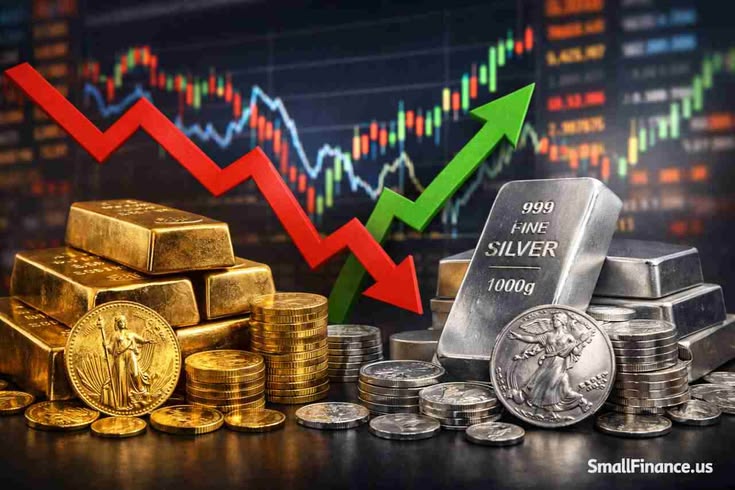
Gold vs. Silver CFDs: Why These Precious Metals React Differently to Market Events
Gold and silver are often grouped together as precious metals, but their prices do not always move in the same direction. Gold frequently attracts attention during financial uncertainty, while silver responds to both investment demand and industrial activity. These differences matter when trading metal CFDs because similar-looking instruments can produce very different outcomes. Investors comparing forex trade brokers that offer metals trading should understand what drives each market. Examining industrial demand, economic conditions, and price volatility can help traders recognize why silver sometimes experiences sharper movements than gold.
Gold and Silver Serve Different Purposes
Gold has a long history as a store of value and reserve asset. Central banks, investors, and jewelry manufacturers contribute to global demand. Its price often responds to interest rate expectations, currency movements, and changes in confidence across financial markets.
Silver also attracts investors, but a significant portion of its demand comes from industrial applications. Electronics, electrical equipment, and solar technologies use silver because of its conductive properties. This additional source of demand makes silver sensitive to developments beyond traditional investment markets.
Industrial Growth Can Influence Silver Prices
Imagine manufacturers increasing production of solar panels and electronic components. Stronger industrial activity may support demand for silver, particularly when businesses require additional raw materials to meet production targets.
Traders exploring a forex demo can observe how silver prices respond to manufacturing reports and economic developments. However, increased industrial demand does not guarantee higher prices. Mining production, inventories, currency movements, and investor expectations can influence the overall market response.
Understanding the Gold-to-Silver Ratio
The gold-to-silver ratio measures how many ounces of silver are required to purchase one ounce of gold. It is calculated by dividing the gold price per ounce by the silver price per ounce.
For example, if gold trades at $2,400 and silver at $30 per ounce, the ratio equals 80. Changes in this figure show relative price performance, but they do not establish whether either metal is objectively cheap or expensive.
Why Silver Often Experiences Sharper Movements
Silver’s market is smaller than gold’s in several important respects, and changing investment or industrial demand can contribute to substantial price movements. Periods of increased uncertainty may produce rapid fluctuations.
Gold can also experience significant volatility, especially during major financial developments. Traders should avoid assuming it will remain stable during every market crisis. The behavior of both metals depends on liquidity, economic expectations, and changing market participation.
Factors Worth Watching Before Trading
A useful metals analysis considers several economic influences rather than treating gold and silver as interchangeable. Different combinations of factors can influence the two markets at the same time.
Important developments to monitor include:
-
US dollar movements and interest rate expectations.
-
Global manufacturing and industrial production data.
-
Demand from solar and electronics industries.
-
Central bank gold purchasing activity.
-
Mining production and supply disruptions.
-
Changes in the gold-to-silver ratio.
These indicators provide context rather than dependable trading signals. A favorable economic development may already be reflected in market prices before an official announcement appears.
CFD Trading Adds Another Layer of Risk
Trading gold or silver CFDs does not normally involve taking delivery of physical metal. Instead, the contract provides exposure to price movements, with gains or losses determined by applicable trading conditions.
Many CFDs involve leverage, allowing positions larger than the margin initially committed. This increases financial exposure and can amplify unfavorable price movements. Traders should examine contract sizes, spreads, margin requirements, and overnight financing charges before opening positions.
Choosing Between Two Metals Requires Context
Suppose a trader expects stronger global industrial production. Silver may deserve attention because of its manufacturing applications, but that expectation alone is insufficient to establish a trading decision.
Another trader concerned about monetary uncertainty might study gold’s relationship with interest rates and investor sentiment. Both approaches require understanding current conditions, possible losses, and whether the selected instrument matches the trader’s financial circumstances.
Conclusion
Gold and silver share certain characteristics, but their markets respond to different combinations of investment demand, industrial activity, and economic expectations. Their contrasting behavior becomes especially important when leverage increases exposure through CFD contracts. Traders examining BtcDana.com can review its available metals instruments and trading conditions while learning about these market differences. Rather than assuming precious metals move together, understanding their individual demand drivers offers a more useful foundation for evaluating price behavior and managing trading risks.